
What to include in your WMS RFP template
How do you ensure your next warehouse management system delivers exactly what you need? Whether you’re upgrading from a legacy platform or implementing WMS for the first time, a detailed RFP gives you clarity on functionality, integrations, support, and costs so you can compare apples to apples.
To build that RFP, you must capture every requirement your operations depend on, from core warehouse management system functional requirements to specialized workflows. Use this WMS RFP template to gather precise responses, reduce evaluation time, and make a confident selection.
1. Core functionality requirements
List what you must have, should have, and nice to have. Organize requirements by business process so each vendor can explain how their WMS addresses your needs and highlights their differentiators.
Consider asking for:
- Receiving: support for ASN, automated check‑in, damage tracking
- Put‑away: dynamic slotting, zone assignments, real‑time guidance
- Yard & appointment scheduling: dock management, carrier notifications
- Asset management: real‑time location, utilization metrics
- Inventory management: cycle counting, lot/serial tracking, discrepancy alerts
- Quality control: inspection workflows, hold release processes
- Picking: directed pick paths, batch/zone wave strategies
- Packing: dimension capture, packing validation, cartonization
- Shipping: carrier rates, manifest generation, TMS connectors
- Performance management: KPIs, dashboards, mobile alerts
- Integrated WMS slotting: AI‑driven optimization, replenishment triggers
- Alerts & audits: configurable notifications, exception reporting
- Automation: robotics support, conveyor/APIs, voice picking
- Labor management: workload balancing, time tracking, incentive modules
- Specialty sections: cold chain, multi‑tenant, manufacturing, IoT sensor integration
2. Existing technology & infrastructure
Physical assets
List every device in your warehouse: PCs, RF scanners, printers, conveyors, robots. Confirm support for each and ask what additional hardware the vendor’s WMS covers
Software environment
Document your current software stack (ERP, CRM, TMS, MES) and operating systems. Ask vendors to describe:
- Integration tiers: native connectors, middleware, API frameworks
- Support levels: application maintenance, OS patches, version upgrades
- Scalability: multi‑warehouse database sharing, cloud vs. on‑premises options
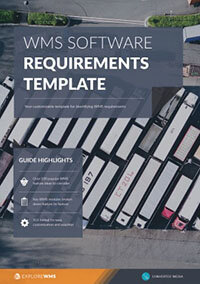
Our WMS requirements template helps you draw up and prioritize a list of software requirements
3. Hardware & architecture specifications
Detail server requirements, virtualization, cloud deployment models, and network topology. Include security controls, backup strategies, and high‑availability features such as redundant power and failover clustering. Ensure your RFP requests clear uptime SLAs and disaster‑recovery procedures.
4. Required integrations
Integration is a cornerstone of any effective WMS. In your RFP, include a checklist of systems to connect:
- ERP (mandatory)
- CRM
- Transportation Management System (TMS)
- eCommerce platforms
- 3PL or carrier networks
For each, ask vendors to share:
- Number of successful integrations with that system
- Typical project timeline and resource requirements
- Post‑go‑live support and change‑management approach
If you have specific functional requirements beyond core integrations (such as IoT sensor data streams or machine‑learning forecasting), cover them here.
5. Vendor company information
Request background on the vendor’s:
- History and track record in your industry
- Key client references and case studies
- Warranty, support tiers, and service‑level commitments
- User communities and opportunities for beta testing or feedback loops
Finally, confirm that the vendor provides multiple contact channels (email, phone, portal) and that escalation procedures are clear. If you can’t quickly find how to reach them, consider removing them from your shortlist.
Next steps
Use this outline alongside our full WMS RFP guide and template (it's free!). Customize it to your operations, and prioritize your requirements. That way, you’ll get detailed, comparable proposals and find the right WMS for your business.

Free white paper

WMS RFP Guide
Download our free WMS RFP guide to create a detailed, vendor-ready request for proposal. Attract better bids and avoid costly mistakes.

Featured white papers

Related articles
-

Your complete WMS features and requirements guide
How to gather requirements for a new WMS, and features to look for to meet them
-

Mission-critical features of food lot traceability software
What features of food traceability software will help you during a food recall
-

Here's your complete WMS modules and features checklist
All the features and modules you might need in your WMS - perfect for requirements gathering